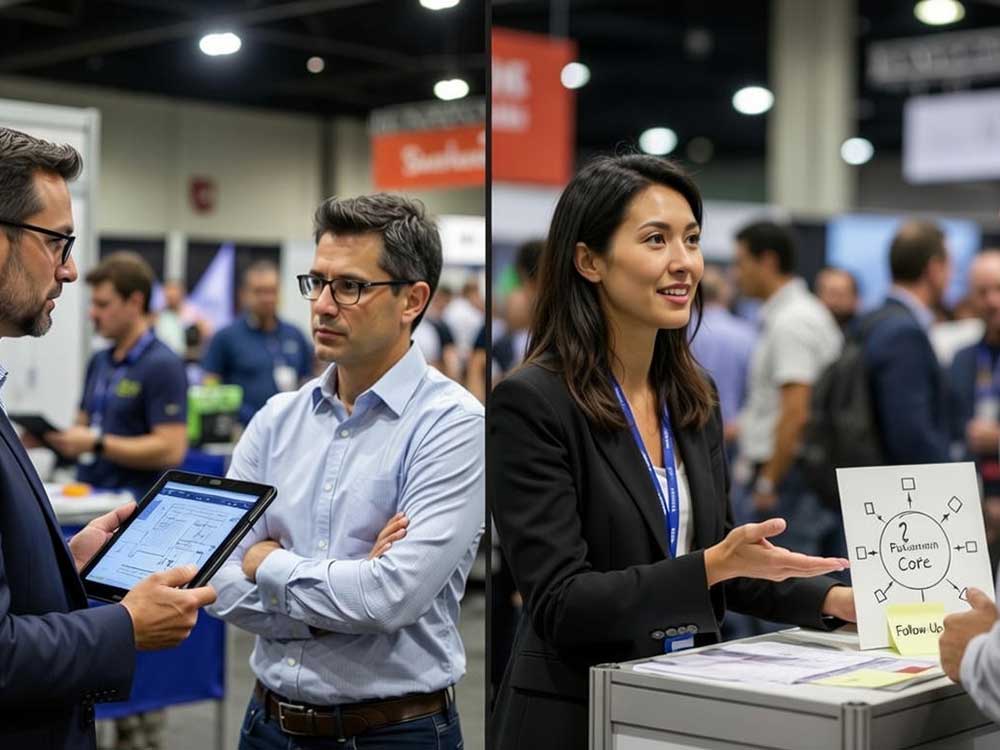
Have you ever experiencing such situation where you’ve invested months planning your exhibition. The booth design is stunning, your products are revolutionary, and your marketing materials are pristine. Opening day arrives, and then… disaster strikes. Your staff can’t answer basic questions. They’re slouching, scrolling through their phones, or worse—scaring away potential clients with their lackluster attitudes.
Sound like a nightmare? It happens more often than you’d think.
The brutal truth about exhibitions is that your booth staff can make or break your entire investment. While companies obsess over booth aesthetics and promotional giveaways, they often overlook the most critical element: the human beings representing their brand. These aren’t just warm bodies filling space—they’re your frontline warriors, your brand ambassadors, and potentially the difference between a flood of quality leads and an expensive waste of time.
But here’s where it gets interesting: recruiting the right exhibition staff isn’t just about finding people who can smile and hand out brochures. It’s a strategic process that combines psychology, logistics, and an understanding of what truly drives engagement in those high-pressure, fast-paced environments. The companies that understand this distinction? They’re the ones whose booths are buzzing with activity while competitors stand around wondering where they went wrong.
So how do you find these exhibition unicorns—the staff members who can transform curious passersby into qualified leads? Let’s dive deep into the art and science of recruiting exhibition manpower that actually delivers results.
Understanding What Exhibition Staffing Really Means
Before you even think about posting job ads, you need to shift your entire perspective on what exhibition staff actually do.
These aren’t retail workers. They’re not your regular office team transplanted to a convention center. Exhibition environments demand a unique cocktail of skills that most people simply don’t possess naturally. You’re looking for individuals who can maintain infectious energy for eight-hour stretches, read body language in milliseconds, pivot conversations seamlessly, and represent your brand values authentically—all while standing on concrete floors in a cacophony of competing stimuli.
The stakes are astronomical. Consider this: the average exhibition attendee spends just 8.3 hours on the show floor across all days. If your booth occupies even a generous 400 square feet at a major trade show, you’re competing for attention in a space where visitors have hundreds of other options. Your staff has, at most, seconds to capture attention and maybe three to five minutes to make an impression that converts.
This reality means your recruitment strategy can’t be casual or last-minute. It needs to be as meticulously planned as any other aspect of your exhibition presence.
Defining Your Ideal Exhibition Profile
The biggest mistake companies make? Assuming anyone outgoing and friendly will suffice.
Start by creating a detailed profile of your ideal exhibition team member. This goes far beyond a job description—you’re sketching a psychological and professional portrait. What does your perfect booth representative look like in action?
Energy levels matter immensely. Some people naturally radiate warmth and approachability. Others, despite being competent professionals, have a reserved demeanor that reads as unapproachable in exhibition settings. You need the former. Look for individuals whose baseline energy is naturally elevated—people who genuinely enjoy human interaction rather than those who merely tolerate it.
Product knowledge requirements vary depending on your industry. For technical B2B exhibitions, you might need staff with genuine industry experience who can discuss specifications and answer complex questions. For consumer-focused events, enthusiastic brand advocates who embody your target customer might be more valuable than technical experts. Determine this upfront because it dramatically changes where and how you recruit.
Physical stamina isn’t optional. Exhibition work is genuinely exhausting. Standing for extended periods, maintaining high energy, projecting your voice over ambient noise, and staying mentally sharp despite sensory overload—these demands filter out many candidates who look perfect on paper. Your recruitment should explicitly address these physical realities.
Resilience and rejection tolerance separate good exhibition staff from great ones. Most booth visitors won’t stop. Most conversations won’t convert. Your team needs people who can hear “no thanks” fifty times and still approach the fifty-first person with genuine enthusiasm. This psychological resilience is rare and precious.
Where to Find Exhibition-Ready Talent
Now that you know what you’re looking for, where do you actually find these people?
Specialized staffing agencies represent the fastest route to exhibition-experienced professionals. These agencies maintain rosters of brand ambassadors, promotional staff, and exhibition specialists who’ve worked hundreds of events. The advantage? They understand the unique demands and can pre-screen candidates for exhibition-specific qualities. The drawback? Higher costs and potentially less brand-specific knowledge. This option shines when you’re facing tight timelines or need staff in unfamiliar cities.
University and college networks offer untapped goldmines of talent. Students from marketing, communications, hospitality, and business programs are often eager for real-world experience. They bring natural energy, tech-savviness, and the ability to connect with younger demographics. Establish relationships with university career centers, professors, and student organizations. Many institutions have formal work-study or internship programs that can reduce costs while providing valuable experience to students.
Your existing customer base contains hidden champions. Think about it—who better to represent your product than people who already love and use it? Reach out to engaged customers, brand advocates, or community members. Their authentic enthusiasm is impossible to fake and resonates powerfully with prospects. This strategy works exceptionally well for consumer brands with passionate followings.
Industry professionals and freelancers provide another valuable source. Many people work exhibitions as side income—they’re marketing professionals, salespeople, or entrepreneurs who enjoy the variety and networking opportunities exhibitions provide. LinkedIn, industry forums, and professional groups can connect you with these experienced freelancers.
Previous exhibition staff should never be overlooked. If you’ve exhibited before, review your historical team. Who performed exceptionally? Who received positive feedback? Building a reliable roster of proven performers creates consistency and reduces recruitment stress for future events. Treat your best exhibition staff like the valuable assets they are—maintain relationships, provide first-right-of-refusal for upcoming events, and compensate them competitively.
Crafting Job Postings That Attract Quality Candidates
Your recruitment advertisement is your first filter. Write it poorly, and you’ll drown in unqualified applications. Nail it, and qualified candidates will self-select.
Be refreshingly honest about what the job entails. Don’t sugarcoat the challenges—standing for long hours, high-energy requirements, and the fast-paced environment. Candidates who are deterred by transparency would have performed poorly anyway. Those attracted by your honesty are more likely to thrive.
Highlight the unique benefits beyond just compensation. Exhibition work offers networking opportunities, industry exposure, skill development, and variety that regular jobs don’t provide. Many people specifically seek exhibition work for these intangible benefits. Mention if food is provided, if there are breaks in comfortable areas, or if staff can attend interesting seminars between shifts.
Use compelling language that reflects your brand personality. If you’re a fun, innovative startup, let your job posting reflect that energy. If you’re a luxury brand, maintain that sophistication in your recruitment materials. Your job ad is itself a branding opportunity that signals what kind of people fit your culture.
Specify clear qualifications and expectations. Include details like exact dates and hours, dress code, specific responsibilities, and any special requirements. Ambiguity creates mismatched expectations and higher no-show rates. Be crystal clear about compensation structure—hourly rates, whether there are performance bonuses, and how payment is processed.
The Interview Process: Seeing Beyond the Resume
Standard interviews fail spectacularly for exhibition recruitment. Someone who interviews well in a quiet office might freeze in exhibition chaos.
Conduct dynamic, situational interviews that simulate exhibition conditions. Don’t just ask “Tell me about yourself”—create scenarios. “A visitor approaches the booth looking skeptical and rushed. They say they’ve seen products like ours before and weren’t impressed. What do you do?” Listen not just to their answer but to their energy, body language, and problem-solving approach.
Incorporate role-playing exercises. Have candidates practice approaching you as if you’re a passing attendee. Can they initiate conversation naturally? Do they ask engaging questions? Can they read your interest level and adjust accordingly? This simple exercise reveals more than thirty minutes of traditional interview questions.
Assess physical presence and energy. Pay attention to posture, eye contact, voice projection, and overall demeanor. These subtle factors dramatically impact how prospects perceive your booth. Someone who sits slumped during an interview will likely stand slumped at your booth—and that costs you business.
Explore their understanding of your brand and industry. You don’t necessarily need experts, but you do need people who’ve done basic research and show genuine interest. Candidates who couldn’t spend fifteen minutes reviewing your website probably won’t invest emotional energy in representing you well.
Ask about previous exhibition, retail, or hospitality experience. These environments share relevant skill sets. Someone who’s thrived in customer-facing, high-energy roles is more likely to succeed at exhibitions than someone whose experience is purely administrative or technical.
Training: The Non-Negotiable Investment
Even experienced exhibition professionals need event-specific training. Skipping this step is organizational malpractice that undermines your entire investment.
Product and brand training forms the foundation. Your staff needs to understand what you’re selling, why it matters, who it’s for, and what makes you different. But go beyond features—teach them stories, customer success examples, and the emotional benefits your offering provides. People don’t buy specifications; they buy transformations.
Booth logistics and protocols prevent operational disasters. Where are materials stored? Who handles which responsibilities? What’s the process for collecting lead information? When are breaks scheduled? How do staff signal they need help? Creating clear systems and communicating them thoroughly eliminates confusion and maintains professionalism.
Engagement techniques can be taught and practiced. Teach your team how to read approaching body language, how to initiate conversations without being pushy, how to qualify leads efficiently, and how to gracefully conclude conversations when someone isn’t a fit. Role-play different scenarios until these techniques become second nature.
Technical demonstrations require dedicated practice if your exhibition involves product demos or technology. Nothing destroys credibility faster than staff who fumble with their own products. Schedule hands-on training sessions where every team member performs demonstrations repeatedly until they’re seamless.
Brand voice and messaging consistency ensures everyone represents your company coherently. Provide talking points, but encourage natural delivery. Your staff should sound knowledgeable and authentic, not like they’re reading from scripts.
Managing and Motivating During the Event
Recruitment doesn’t end when the exhibition begins. Managing your team throughout the event directly impacts performance and results.
Establish clear expectations and goals before the event starts. Are you focused on lead quantity, lead quality, product demonstrations, or brand awareness? Different goals require different approaches, and your team needs clarity on what success looks like.
Implement shift schedules strategically. Don’t have everyone working identical hours. Stagger breaks to ensure consistent booth coverage. Schedule your most energetic staff during peak traffic times. Consider shorter shifts with more people rather than exhausting everyone with marathon hours—tired staff deliver dramatically worse results.
Create a supportive environment with designated rest areas, refreshments, and regular check-ins. Exhibition work is demanding, and small comforts significantly impact morale and performance. Show your team they’re valued beyond just their labor.
Provide real-time feedback and coaching. Don’t wait until after the event to address issues. If you notice someone struggling, pull them aside constructively and offer guidance. Similarly, acknowledge great performance immediately—recognition fuels motivation.
Foster team cohesion through pre-event gatherings or team meals. When staff feel connected to each other and invested in collective success, they naturally support each other and maintain higher energy levels.
Measuring Success and Building Your Future Roster
After the exhibition concludes, your recruitment work continues.
Conduct thorough debriefs with each team member. What worked well? What challenges did they face? What suggestions do they have? This feedback improves your approach for future events and shows staff their input matters.
Analyze performance metrics wherever possible. How many leads did each person generate? What was the quality of those leads? Track data not to punish poor performers but to identify what exceptional performance looks like and replicate it.
Maintain relationships with top performers. Send thank-you notes, provide references if requested, and add them to your preferred vendor list for future events. Building a reliable roster of proven exhibition staff is one of the most valuable assets for companies that regularly exhibit.
Refine your recruitment process based on what you learned. Which sourcing channels provided the best candidates? Which interview techniques best predicted success? What training elements had the biggest impact? Treat each event as a learning opportunity that sharpens your approach.
People Are Your Exhibition ROI
Exhibitions represent significant investments—booth space, design, travel, materials, and opportunity cost all add up quickly. Yet many companies treat staffing as an afterthought, either grabbing whoever’s available from internal teams or hiring the cheapest bodies they can find.
This is strategic negligence.
Your exhibition staff are the only element of your booth that actively generates results. Everything else—the design, the products, the marketing materials—is passive until a human being activates it through conversation and connection. Investing in recruiting, training, and managing the right people isn’t an expense; it’s the factor that determines whether your entire exhibition investment pays off or fails.
The companies whose booths consistently outperform competitors aren’t necessarily those with the biggest budgets or flashiest designs. They’re the ones who understood that exhibitions are ultimately about human connection, and they recruited people capable of creating those connections at scale.
So yes, obsess over your booth design. Perfect your product displays. Create stunning marketing collateral. But above all else, invest the time and resources to recruit exhibition staff who can transform all those static elements into conversations, relationships, and ultimately, business results.
Because at the end of the exhibition, when you’re calculating ROI, you won’t be measuring your booth’s square footage or your banner’s resolution. You’ll be counting leads, opportunities, and relationships—all of which trace back to the quality of people you put on the front lines.
Choose them wisely. Train them thoroughly. Support them completely. And watch them transform your exhibition presence from just another booth into a lead-generating powerhouse that makes your competition wonder what you’re doing differently.
The answer? You recruited the right people. Everything else followed from there.